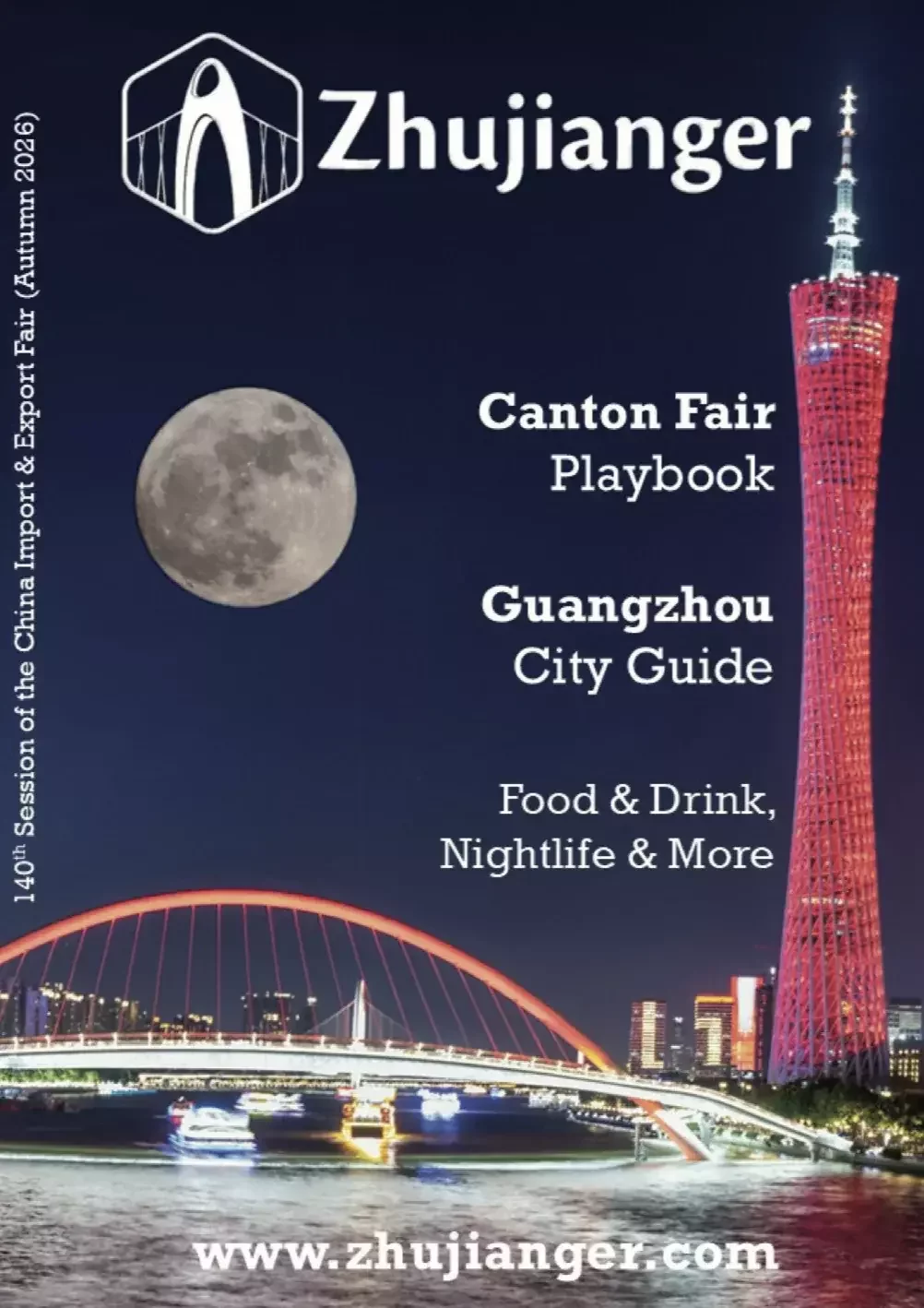
China's 240-Hour Visa-Free Transit:
The Buyer's Guide to Guangzhou
Ten days in China. No visa required. Here's everything sourcing professionals and Canton Fair buyers need to know: the complete 2025–2026 guide written for people who are actually doing business.
In December 2024, China quietly expanded one of its most useful policies for international business travellers. The 240-hour (10-day) visa-free transit programme now covers 55 countries and 60 entry ports, including Guangzhou Baiyun International Airport, the gateway for the Canton Fair.
Most guides covering this policy are dry government FAQs. This one is written for the person who's about to fly into Baiyun, spend time sourcing in Guangzhou and Shenzhen, and then continue to Hong Kong or Singapore. We'll cover what you need, how immigration works on the ground, where you can go, and how to make the most of ten days.
Business activities including trade shows, factory visits, and sourcing meetings are explicitly permitted under the 240-hour transit policy. This means you can attend the Canton Fair, visit Guangzhou's wholesale markets, and meet with suppliers, all without a visa.
Who Qualifies: The 55 Eligible Countries
The policy applies to passport holders from the following 55 countries. If your country is on this list, you can enter China without arranging a visa in advance, as long as you meet the three entry conditions (covered in the next section).
Europe (40 countries)
Americas (6 countries)
Asia-Pacific & Middle East (9 countries)
If your country isn't listed above, you will need to apply for a visa before travel. Check the Guangzhou visa updates page or visit the official China Visa Application Service Center for your country. The list is actively expanding; Indonesia was only added in June 2025.
The Three Entry Conditions
Holding a passport from an eligible country is only the first requirement. You must meet all three conditions at the port of entry:
Passport from an eligible country
Your passport must be from one of the 55 qualifying nations listed above. It must have at least 3 months of validity remaining beyond your intended departure date. A nearly-expired passport is a common reason for entry complications, so check before you book.
Confirmed onward ticket to a third country
You must hold a confirmed ticket (with a specific date and seat number) departing China to a third country within 240 hours. The destination must not be the country you originally flew from. For example: departing the UK → entering at Guangzhou → onward to Singapore is valid. UK → Guangzhou → UK is not valid.
The ticket must be an interline booking (the return leg can connect through Hong Kong or Macau). Open-jaw itineraries (fly in to Guangzhou, fly out from Shanghai) are perfectly fine.
Completed China Arrival Card
The Arrival Card is now available digitally. Many airlines provide a QR code to complete it online before you fly, and some airports offer digital kiosks on arrival. A paper version is still available on the plane if needed. Your hotel address (or a supplier's address, if you haven't booked accommodation) goes in the "Address in China" field. Immigration may ask where you're staying, so have a specific hotel name ready even if you haven't confirmed. You can always change it after entry.
Entering via Guangzhou Baiyun Airport
Guangzhou Baiyun International Airport (airport code: CAN) is one of the 60 designated ports of entry for the 240-hour policy, and the main gateway for Canton Fair attendees. Here's exactly what to expect on arrival.
At immigration: step by step
Head to the foreign passport queue
After landing, follow signs for "International Arrivals" and join the non-Chinese passport queue. Do not join the e-gate lanes; those are for Chinese citizens and holders of recognised residence permits.
Hand over your passport, Arrival Card, and onward ticket
When you reach the counter, hand over your passport with the Arrival Card inside it. The officer will ask for your onward ticket, so have it ready on your phone (a screenshot works; you don't need signal). They may also ask the purpose of your visit: "business" or "attending trade show" is the right answer.
Biometrics
You'll have fingerprints scanned and a photo taken. This is standard procedure and takes about 60 seconds.
Check your entry stamp
Before leaving the counter, check that your passport is stamped with the correct entry date and "240H" or "TWOV" notation. If you can't read the stamp clearly, ask the officer. Your 240 hours begins at 00:00 the day after your entry date, not from the time you land.
The five designated entry points in Guangdong province are: Guangzhou Baiyun Airport, Shenzhen Bao'an Airport, Jieyang Chaoshan Airport, Nansha Port (passenger ferry), and Shekou Port (passenger ferry). You can enter at one and exit from a different port entirely, including one in another province such as Shanghai Pudong.
What to Have Ready
Immigration checklist
- Passport (from eligible country, valid 3+ months beyond your last day in China)
- Confirmed onward ticket with specific date and seat, saved offline on your phone
- China Arrival Card: complete it digitally via airline QR code before flying, at an airport kiosk on arrival, or on the paper form handed out on the plane
- Hotel name and address written down (WeChat screenshot, email, or note)
- Supplier contact info or Canton Fair badge confirmation (useful if questioned)
- Health insurance documentation (not required but good to have)
Where You Can Go During Your 240 Hours
The policy allows you to travel freely within 24 designated provinces and direct-governed municipalities. This covers almost every destination a business traveller or tourist would want to visit.
| Region | Key Cities | Travel Time from GZ |
|---|---|---|
| Guangdong (your base) | Guangzhou, Shenzhen, Foshan, Dongguan | Base province |
| Hong Kong SAR | Hong Kong | ~50 min (high-speed rail) |
| Shanghai | Shanghai (Pudong, Jing'an) | ~8 hrs train / 2.5 hrs flight |
| Beijing | Beijing | ~9 hrs train / 3 hrs flight |
| Sichuan | Chengdu | ~2 hrs flight |
| Shaanxi | Xi'an | ~2.5 hrs flight |
| Fujian | Xiamen, Fuzhou | ~1.5 hrs flight |
| Zhejiang | Hangzhou, Yiwu | ~2 hrs train from Shanghai |
| Jiangsu | Suzhou, Nanjing | ~30 min from Shanghai |
Tibet, Xinjiang, and Inner Mongolia are not in the 24 designated regions and require separate permits even for visa-free travellers. For most Canton Fair attendees, you'll stay within Guangdong anyway.

🏭 Canton Fair: Planning Your 240 Hours
The Canton Fair runs in three phases across April–May and October–November each year. Here's how to time your 240-hour window around it.
Fly in 1–2 days before your target phase starts. You'll want time to recover from jet lag and sort your badge, hotel, and transport.
Each phase is 5 days. Use your 240 hours to attend the phase, visit Guangzhou's wholesale markets, and take a Shenzhen factory day-trip.
Book a confirmed flight to Hong Kong, Singapore, or your return hub within your 240-hour window. A Guangzhou to HK flight is under an hour.
The 140th Canton Fair runs in October 2026. Check the Canton Fair dates page for exact phases before booking.
When Does the 240-Hour Clock Start?
This is the question that catches people out. The 240 hours does not start when you land. It starts at 00:00 (midnight) on the day after your entry date.
You land in Guangzhou on Monday, 6 October at 14:30.
Your entry date is Monday 6 October. Your 240-hour clock starts at 00:00 on Tuesday 7 October. Your 240 hours expire at 00:00 on Friday 17 October.
You must depart China before midnight on the night of Thursday 16 October / Friday 17 October. An evening flight on Thursday is fine; a Friday morning flight is not.
Book your onward flight with a comfortable buffer. Avoid cutting it to 11:55pm on day ten, as immigration delays at popular departure airports can push you over the line.
Practical Tips for Your First Visit
Money and payments
China is almost entirely cashless, and the two main payment apps, WeChat Pay and Alipay, now both support foreign debit and credit cards through their international versions. Set up Alipay's international version before you fly: add a Visa or Mastercard, and you can pay in shops, restaurants, and taxis within minutes of landing. Some markets still prefer cash for large wholesale orders, so bring some USD or EUR to exchange at the airport arrivals hall (the Bank of China counter has reasonable rates).
Getting around Guangzhou
The Guangzhou Metro is excellent, extensive, and very cheap. The metro connects Baiyun Airport (via Line 3) directly to the Canton Fair complex at Pazhou (琶洲) on Line 8. Journey time: about 80 minutes. For taxis, use Didi (China's Uber equivalent): download the app, add your international card, and you can book rides in English. See the Guangzhou Metro route planner for maps and fares.
SIM cards and internet
Buy an eSIM before you travel. Several providers (Airalo, Nomad) offer affordable China data plans. Note that Google, WhatsApp, Instagram, and most Western apps are blocked in mainland China, so research your connectivity options before you fly.
Language

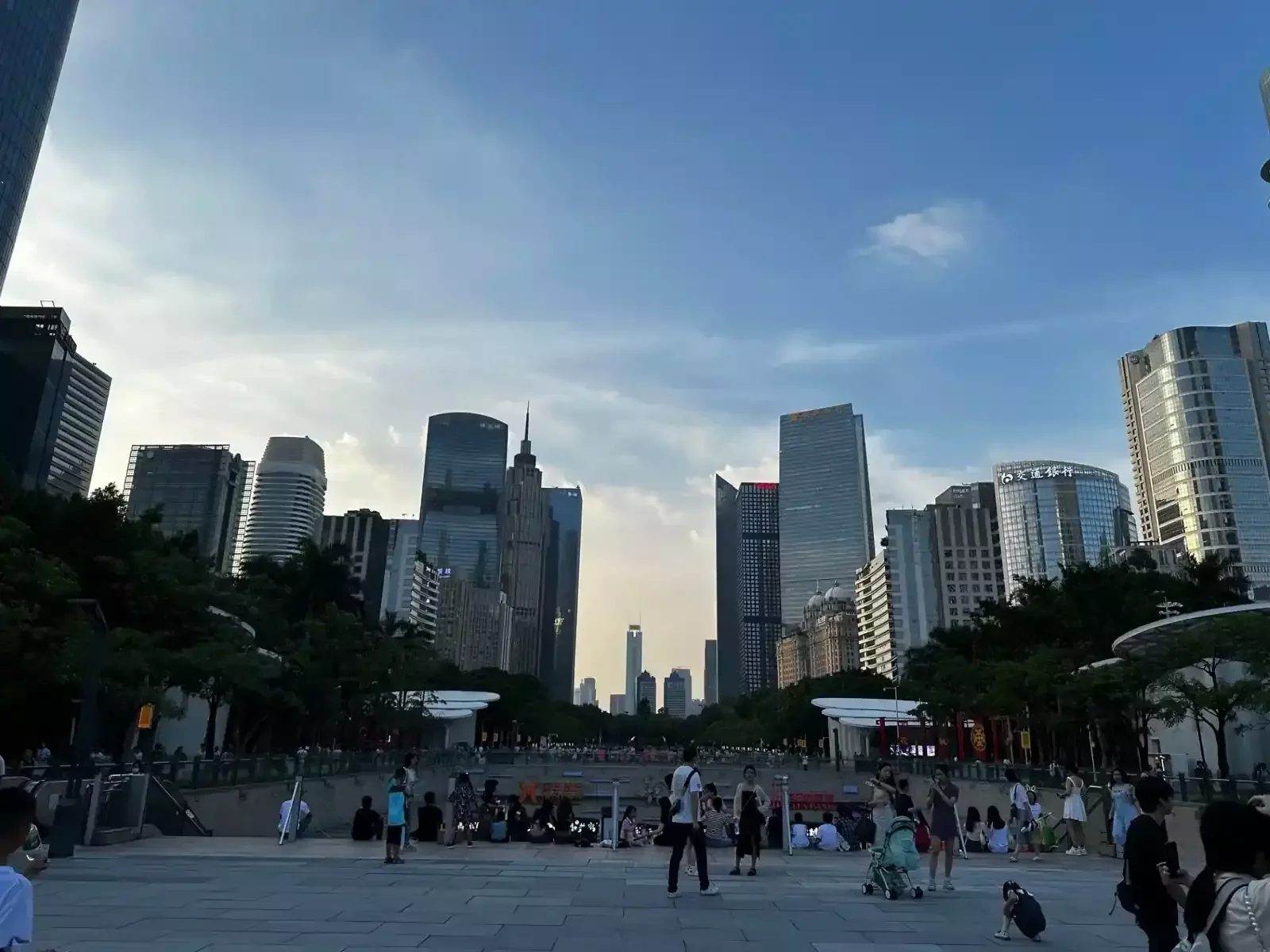
In Guangzhou's business areas (Pazhou, Tianhe, Zhujiang New Town) you'll find English-speaking staff in hotels and major restaurants. At the wholesale markets, English is limited but manageable. Google Translate's camera feature works well on product labels and market signs. Download the offline Mandarin and Cantonese packs before flying.
Common Mistakes to Avoid
Onward ticket to the same country you departed from. Manchester → Guangzhou → London is not valid. You need to transit to a genuine third country.
An unconfirmed ticket. A "pending" booking or a refundable hold without a seat number doesn't count. Print or screenshot the confirmed booking with seat assignment.
Passport with less than 3 months validity. Check the expiry date before booking your trip, not after.
Overstaying. Overstaying the 240-hour window can result in fines and future visa complications. The authorities are strict about this.
What you cannot do on the 240-hour transit
- Work for a Chinese employer (requires a Z visa)
- Study (requires an X visa)
- Conduct journalism or news reporting (requires a J visa)
- Visit areas outside the 24 designated provinces/municipalities
- Extend the 240-hour period (there are no extensions)
All 60 Entry Ports
As of the 2024 expansion, the policy covers 60 designated ports of entry across 24 provinces. Here are the most relevant ones for travellers coming through Guangdong and the Pearl River Delta:
| Port | Type | Province |
|---|---|---|
| Guangzhou Baiyun International Airport | Air | Guangdong |
| Shenzhen Bao'an International Airport | Air | Guangdong |
| Jieyang Chaoshan International Airport | Air | Guangdong |
| Nansha Port (Passenger) | Sea | Guangdong |
| Shekou Port (Passenger) | Sea | Guangdong |
| Beijing Capital International Airport | Air | Beijing |
| Beijing Daxing International Airport | Air | Beijing |
| Shanghai Pudong International Airport | Air | Shanghai |
| Shanghai Hongqiao International Airport | Air | Shanghai |
| Chengdu Tianfu International Airport | Air | Sichuan |
| Xi'an Xianyang International Airport | Air | Shaanxi |
| Chongqing Jiangbei International Airport | Air | Chongqing |
| Qingdao Jiaodong International Airport | Air | Shandong |
| Tianjin Binhai International Airport | Air | Tianjin |
Frequently Asked Questions
Can I attend the Canton Fair on the 240-hour transit? ⌄
Yes. Business activities including attending trade shows are explicitly permitted under the 240-hour visa-free transit. You can visit the Canton Fair complex at Pazhou, attend all sessions, and meet with exhibitors, all without a visa. What you cannot do is work as an employee of a Chinese company, which requires a different visa type.
Can I enter at Guangzhou and exit from Shanghai or Hong Kong? ⌄
Yes. Open-jaw routing is allowed. You can fly into Guangzhou Baiyun Airport, travel around Guangdong (and any of the other 23 designated provinces), and depart from a completely different city such as Shanghai, Beijing, or Shenzhen. Your onward ticket from any of the 60 designated ports counts as your exit, provided it's within the 240-hour window.
Many buyers fly Guangzhou in → spend time at the fair → take the high-speed rail to Hong Kong → fly home from HKG. This is one of the most efficient routings available.
Does my onward ticket have to be a flight? Can it be a ferry or train? ⌄
Your onward ticket must be to a third country via an international transport connection. Flights are the most common method. The high-speed rail from Guangzhou South or Shenzhen to Hong Kong (West Kowloon) is also valid, since Hong Kong is a separate customs territory. International ferries (Nansha to Macau, for example) can also work, depending on your routing. Confirm your specific routing with the relevant immigration authority if you're unsure.
Can I visit Yiwu market during my 240-hour transit? ⌄
Yes. Yiwu is in Zhejiang province, which is one of the 24 designated regions covered by the 240-hour policy. It's about a 2-hour high-speed train from Shanghai Hongqiao. Many buyers combine a few days in Guangzhou for the Canton Fair with a day trip or overnight stay in Yiwu. Just keep track of your 240-hour window carefully if you're running a packed itinerary.
I'm an American passport holder. Is the US on the visa-free list? ⌄
Yes. The United States is one of the 6 eligible countries from the Americas. US passport holders can enter China under the 240-hour visa-free transit policy, provided they meet all three entry conditions: eligible passport, confirmed onward ticket to a third country, and a completed Arrival Card.
Note that this is specifically the transit policy. If you want to stay longer than 10 days or make a return trip directly from the US, you'll still need to apply for a standard Chinese visa.
What happens if I overstay the 240 hours? ⌄
Overstaying is treated seriously. Penalties typically include a fine (up to ¥10,000 per day of overstay), potential detention, and a formal record that can affect future visa applications for China. There are no extensions available on the 240-hour transit policy. Once you're in, you must depart within the window. Build a buffer into your departure plans to account for potential flight delays or other disruptions.
Can I use Alipay and WeChat Pay without a Chinese bank account? ⌄
Yes. Both Alipay and WeChat Pay introduced international visitor modes in 2023–2024, allowing you to link a foreign Visa or Mastercard directly. Alipay's international version tends to be more stable for first-time visitors. Set it up before you travel, as you'll need to verify your phone number and card during setup, which is easier to do before landing. Once set up, you can pay almost everywhere in Guangzhou, including the Metro, taxis, restaurants, and wholesale markets.
How many times can I use the 240-hour transit policy? ⌄
There is no official limit on how many times you can use the 240-hour transit policy, but immigration officers have discretion. Repeatedly entering and exiting via transit (for example, three times in the same year with no onward visa activity) can attract scrutiny and risk refusal. If you're visiting China multiple times for business, consider applying for a standard business (M) visa, which typically grants multiple entries over 1–2 years.
For informational purposes only. The information on this page is provided as a general guide and does not constitute legal or immigration advice. Visa and transit policies are subject to change at any time without notice. You should not rely solely on this article when making travel, business, or immigration decisions.
Not an official source. Zhujianger is an independent travel and trade guide. This page is not affiliated with, endorsed by, or representative of the Chinese government, the China National Immigration Administration, any embassy or consulate, or any airline or transport provider. Official and up-to-date policy information should always be obtained directly from the China National Immigration Administration (en.nia.gov.cn) or your nearest Chinese embassy or consulate.
Seek professional advice. If you have specific questions about your eligibility, your travel documents, or the legal implications of entering China under the transit policy, please consult a registered migration agent or immigration lawyer in your country before you travel. Individual circumstances vary and entry is ultimately at the discretion of Chinese immigration authorities.