Natural AttractionBaiyun
Baiyun Mountain 白云山
Nicknamed the Lung of Guangzhou, Baiyun Mountain is a scenic area with lush greenery, hiking trails, and panoramic views of the city from its 382-metre peak.
Baiyun District, Guangzhou

Guangzhou city guide
From 1,700-year-old temples to the Pearl River's modern landmarks. Search, filter by district, find every site on the map, and carry a taxi card you can show a driver.
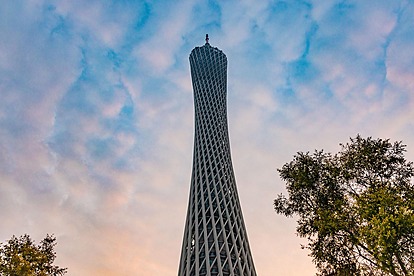
Explore Guangzhou's iconic 600-metre landmark, with observation decks, sky-high thrill rides, and a nightly light show over the Pearl River.
Visit the dedicated pageGuangzhou Guide app
Food, hotels, bars, metro routes, attractions, and wholesale markets, built for travellers and Canton Fair buyers.

Guangzhou rewards curious visitors with ancient temples, colonial streets, riverside landmarks, and big family parks, often within a single day. Search by name, filter by what you want to see and which district you are in, then open any card for the full description, a map link, and a bilingual taxi card.
Nicknamed the Lung of Guangzhou, Baiyun Mountain is a scenic area with lush greenery, hiking trails, and panoramic views of the city from its 382-metre peak.
Baiyun District, Guangzhou
A historic pedestrian street combining ancient ruins with modern shopping, featuring preserved Song Dynasty road sections visible under glass flooring.
Beijing Lu, Yuexiu District, Guangzhou
A Taoist temple dating back to 1380 during the Ming Dynasty, dedicated to the City God who protects the local community.
601 Jiefang Nan Lu, Yuexiu District, Guangzhou
Historic temple dedicated to the legendary five immortals who brought prosperity to Guangzhou, featuring a famous bell tower.
1 Wu Xian Guan Road, Yuexiu District, Guangzhou
One of Guangzhou's most famous Buddhist temples with a history spanning over 1,700 years, known for its impressive architecture and sacred bodhi trees.
109 Guangxiao Road, Liwan District, Guangzhou
One of the oldest mosques in China, built in 627 AD, featuring a distinctive 36-metre minaret called the Guangta, or Light Tower.
56 Guangta Road, Yuexiu District, Guangzhou
Buddhist temple with over 1,400 years of history, famous for its 500 Arhat statues and tranquil Jade Buddha Hall.
78 Xiatang Xi Jie, Liwan District, Guangzhou
Scenic park centred around Lotus Mountain, featuring unique ancient quarry sites, a giant golden Guanyin statue, and beautiful lotus flowers in summer.
Lianhua Shan Park, Panyu District, Guangzhou
Ancient temple honouring the South Sea God, dating back to the Sui Dynasty between 581 and 618 AD, important in China's maritime history.
Miaotou, Huangpu District, Guangzhou
Tomb museum of Zhao Mo, the second king of the Nanyue Kingdom in the 2nd century BCE, displaying thousands of exquisite burial artifacts including a famous jade burial suit.
867 Jiefang North Road, Yuexiu District, Guangzhou
Archaeological site ruins of the ancient Nanyue Kingdom palace from 204 to 111 BCE, showcasing over 2,000 years of Guangzhou's history.
316 Zhongshan Si Lu, Yuexiu District, Guangzhou
Iconic Buddhist temple dating back to 537 AD, famous for its towering 57-metre Flower Pagoda and six ancient banyan trees planted by Su Dongpo.
87 Liurong Road, Yuexiu District, Guangzhou
Historical mosque serving Guangzhou's Hui Muslim community, with a peaceful courtyard and distinctive architecture.
901 Jiefang North Road, Yuexiu District, Guangzhou
Guangzhou's largest urban park, featuring the famous Five Rams sculpture that is the city symbol, artificial lakes, and the historic Zhenhai Tower fortress museum.
960 Jiefang Bei Lu, Yuexiu District, Guangzhou
Exquisite example of traditional Cantonese architecture built in 1894, now housing the Guangdong Folk Art Museum with outstanding wood, stone, and ceramic carvings.
34 Enlong Gang, Zhongshan Qi Lu, Liwan District, Guangzhou
Picturesque colonial-era island with European architecture from the 19th century, tree-lined avenues, and a relaxed atmosphere contrasting with the busy city.
Shamian Street, Liwan District, Guangzhou
Guangzhou's iconic 600-metre tower featuring observation decks, sky-high thrill rides, and spectacular night lighting displays.
222 Yuejiang W Rd, Haizhu District, Guangzhou
Massive zoo and amusement complex with drive-through safari zones housing rare species like white tigers and thousands of animals in naturalistic habitats.
Dashi, Panyu District, Guangzhou
Grand octagonal hall built in 1931 to honour Dr Sun Yat-sen, featuring a 5,000-seat auditorium with impressive acoustics and beautiful gardens.
259 Dongfeng Middle Road, Yuexiu District, Guangzhou
Modern museum housing extensive collections of Cantonese art, natural history specimens, and cultural artifacts in a striking contemporary building.
2 Zhujiang East Road, Zhujiang New Town, Tianhe District, Guangzhou
Futuristic performance venue designed by Zaha Hadid, resembling two smooth pebbles by the river, hosting world-class operas and concerts.
1 Zhujiang West Road, Zhujiang New Town, Tianhe District, Guangzhou
Historic military academy founded by Sun Yat-sen in 1924 that trained leaders for both the Communist and Nationalist forces during China's revolution.
Changzhou Island, Huangpu District, Guangzhou
A striking Gothic Revival Catholic cathedral built entirely of granite between 1863 and 1888, known as the Stone House, with twin 58-metre spires and stained-glass windows.
56 Yide Lu, Yuexiu District, Guangzhou
One of the world's largest science museums, with hands-on galleries, an IMAX and giant-screen cinema, and striking ship-like architecture on University Island.
168 Keda Lu, University Island, Panyu District, Guangzhou
One of the four famous classical gardens of Guangdong, completed in 1871, celebrated for its compact, intricate design of pavilions, ponds, and ornate Lingnan-style carvings.
Nancun, Panyu District, Guangzhou
A classical Lingnan garden blending Qing-era architecture, water features, bridges, and folk art, famous for its giant ceramic murals and tranquil lotus ponds.
Zini, Shawan, Panyu District, Guangzhou
A classic Lingnan-style park of linked lakes, willow-lined paths, and pavilions in the old western district, popular for morning tai chi and Cantonese opera gatherings.
Longjin Xi Lu, Liwan District, Guangzhou
Guangzhou's vast central civic plaza, ringed by the city's signature skyscrapers, the Opera House, library, and museum, with fountains and a nightly skyline of lights.
Zhujiang New Town, Tianhe District, Guangzhou
An evening sightseeing cruise along the Pearl River, passing illuminated bridges, the Canton Tower, and the riverfront skyline from the deck of a passenger boat.
Tianzi Wharf, Yanjiang Zhong Lu, Yuexiu District, Guangzhou
A historic university founded by Sun Yat-sen in 1924, with a leafy riverside campus of red-brick Republican-era buildings and avenues lined with old banyan trees.
135 Xingang Xi Lu, Haizhu District, Guangzhou
A re-created traditional Lingnan village showcasing old Cantonese streets, folk crafts, regional snacks, and performances, offering a window into southern China's heritage.
University Island, Panyu District, Guangzhou
A formal flower garden at the foot of Baiyun Mountain, known for seasonal floral displays, a grand terraced fountain, and themed planting beds in a landscaped bowl.
Baiyun Dadao, Baiyun District, Guangzhou
Visitor's guide
A short, practical primer for first-time visitors and Canton Fair guests with a spare day. A little planning by area turns a scattered list into an easy route.
Guangzhou's sights cluster. Yuexiu, the old centre, packs temples, Yuexiu Park, Beijing Road, and museums within walking and short metro distance. Haizhu and Tianhe hold the modern Pearl River landmarks. Panyu and Huangpu sit further out and suit a half or full day each. Use the map above to group what is close.
The metro is the fastest, cheapest way around the city and reaches most central attractions directly. Buy a stored-value card or use a QR ticket in the metro app. For sites away from a line, finish the trip by taxi or ride-hailing, and show the Chinese taxi card so the driver knows exactly where you mean.
Canton Tower, Chimelong, and the popular temples are busiest in the middle of the day. Arriving near opening gives you shorter queues, cooler weather in summer, and better light for photos. Save indoor sights like Guangdong Museum for the hottest part of the afternoon.
Guangzhou rewards contrast. Pair a morning of ancient temples and the Nanyue ruins with an afternoon at the Opera House and Canton Tower, or follow a quiet walk on Shamian Island with the bustle of Beijing Road. A single day can span 1,700 years of history.
Drivers rarely read English addresses, so each attraction here has a taxi card in Chinese characters. Open any site for the full card, or use the copy button on the card itself to send the Chinese address straight to your phone. You can also print the whole set as a paper backup.
Some sites are free, others need a booked ticket, and a few cap daily visitor numbers. Hours shift with the season and with public holidays, when the busiest attractions fill quickly. Confirm opening times and any advance booking before you set out, especially for Canton Tower and Chimelong.
Questions
Canton Tower for the skyline, Yuexiu Park and Chen Clan Ancestral Hall for history and culture, Shamian Island for colonial architecture, and Baiyun Mountain for nature are common highlights. Temple lovers should add Guangxiao Temple and Six Banyan Trees Temple. The list on this page covers 22 of the city's top sites across every district.
The metro reaches most central attractions and is fast and cheap. For sites away from a station, taxis and ride-hailing are easy, and each attraction on this page has a taxi card with the address in Chinese characters plus a one-tap button to copy it to your phone.
Two to three days covers the headline sights comfortably. One day suits the central cluster of Yuexiu temples, parks, and history; another suits Canton Tower, the Opera House, and Guangdong Museum around the Pearl River; a third allows day trips to Chimelong or Lianhua Shan in Panyu.
Many parks and some temples are free or charge a small entry fee, while major sites like Canton Tower observation decks and Chimelong charge full admission. Always check current ticketing before you go, as prices and booking rules change.
Yuexiu, the old city centre, holds the most: temples, Yuexiu Park, Beijing Road, and key museums. Liwan adds Shamian Island and Chen Clan Ancestral Hall, Haizhu has Canton Tower, Tianhe has the modern cultural quarter, and Panyu and Huangpu host larger sites further out. Use the district filter to see each one.